All Categories
Featured


Next-Generation Enterprise Budget Governance
Table of Contents
The genuine benefit comes from using that effective facilities to simplify operations and maximize productivity. You determine them.
For companies leveraging cloud hosting options that centralize vital software and provide a steady, available platform, these metrics offer a clear view into efficiency. They assist highlight traffic jams, reveal improvement chances, and eventually drive success. For a detailed understanding of the foundational concepts of measuring efficiency, delve into a useful guide on how to determine functional performance successfully.
We will cover actionable insights and useful implementation information for each, guaranteeing you get the optimum return on your technology financial investment. Let's dive into the KPIs that will empower your organization to work with greater precision and function. Originally developed for manufacturing floorings, Total Equipment Efficiency (OEE) has proven to be among the most effective for any asset-heavy organization, including those leveraging substantial cloud infrastructure.
It elegantly integrates three critical factors: Accessibility, Performance, and Quality. steps uptime, representing all planned and unexpected stops. evaluates speed, comparing actual cycle times versus perfect ones. tracks the variety of good systems produced without defects or rework. The final OEE rating is computed by multiplying these three percentages (Accessibility % x Efficiency % x Quality %).
While a best rating is theoretical, world-class business like Toyota often achieve OEE levels of 85% or greater. Executing OEE starts with determining the most important restrictions or bottleneck properties in your operation. Do not attempt to determine whatever at when. Concentrate on a single assembly line or server cluster to construct knowledge and demonstrate value rapidly.
Top Infrastructure Efficiency Tactics for 2026
This affordable method assists your group comprehend the underlying chauffeurs of loss before you invest in expensive automatic tracking systems. It develops a fundamental understanding of the "why" behind the numbers. Ford Motor Business utilizes real-time OEE control panels to provide line managers instant presence into production issues. This permits them to detect the origin of a slowdown-whether it's a maker breakdown (Accessibility loss) or a process traffic jam (Performance loss)-and take corrective action quickly.
As envisioned, each part targets an unique type of functional loss, making OEE an effective diagnostic tool instead of just a passive report card. By examining which of the 3 ratings is most affordable, you can identify exactly where to focus your enhancement efforts for the best effect. Cycle Time is a fundamental functional performance metric that determines the overall time required to complete one complete cycle of a process, from its start to its finish.
For a law practice, this could be the time from client consumption to case resolution, while for an accounting practice, it might be the time to finish a monthly bookkeeping cycle for a client. It is one of the most critical since it straight impacts customer satisfaction and functional cost.
It is computed by measuring the elapsed time in between the conclusion of two succeeding systems or tasks. The moment work begins on a particular task or item. The minute that same job or product is completely finished and ready for the next step. Overall Net Production Time/ Number of Units Produced.
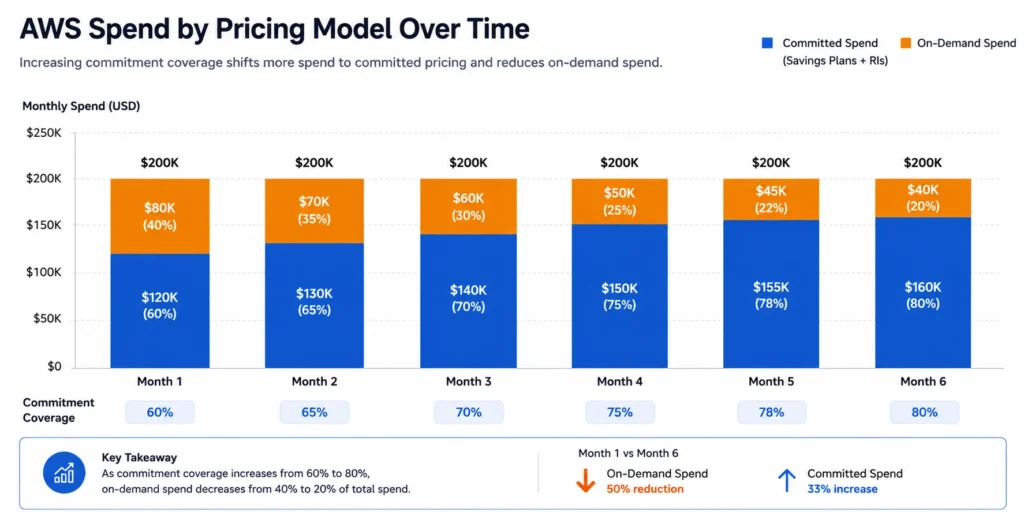
For instance, Dell changed PC manufacturing by decreasing its build-to-order cycle time to under 5 days, an enormous competitive benefit. Amazon's unrelenting focus on shrinking its order satisfaction cycle time from days to hours, powered by storage facility automation and cloud-based logistics, has redefined e-commerce expectations. The initial step in leveraging Cycle Time is to plainly define the start and end points of the procedure you wish to determine.
Achieving Peak IT Performance for 2026
Don't just track the average Cycle Time; likewise monitor its variation or standard deviation. A process with a low average but high irregularity is unforeseeable and tough to manage, frequently causing more client aggravation than a slightly longer but extremely constant process.
For a small company, this could begin with a simple shared spreadsheet where team members log start and end times. As you develop, you can implement automatic tracking within your practice management or workflow software. The secret is to examine the collected data to discover bottlenecks, which are the actions in the procedure that take the longest.

Latest Posts
Proactive Cloud Asset Management for Cost Control
Is Your 2026 IT Spending Ready?

Scalable Methods to Lower Enterprise Costs